Petrochemical
Introduction
Petrochemical and refinery process liquids may contain corrosion products, catalyst fines, coke, scale, gels, and other particles that affect equipment performance and product quality. Fengnuochang provides filtration equipment for process liquids, cooling water, and wastewater treatment. Selection depends on fluid properties, contaminant loading, operating conditions, material compatibility, and downstream requirements.
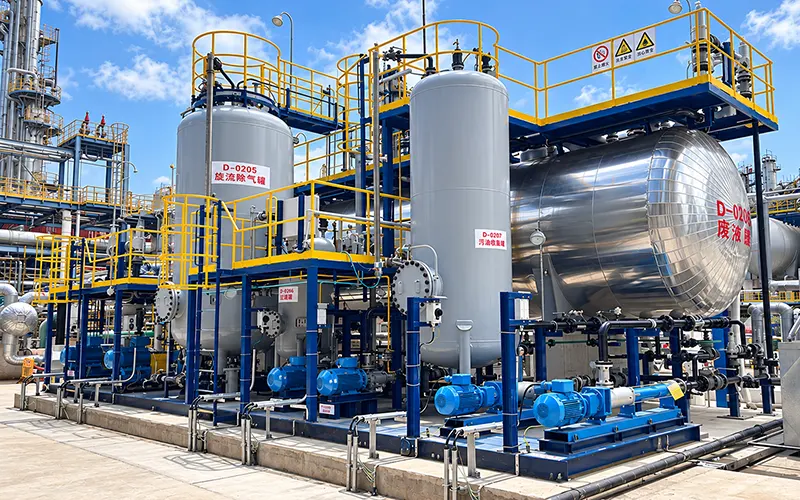
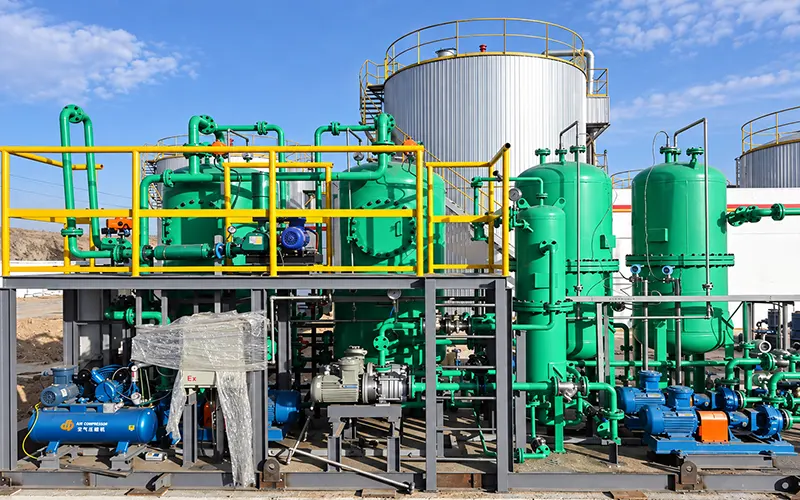
FILTRATION EQUIPMENT FOR PETROCHEMICAL APPLICATIONS
Petrochemical filtration covers a wide range of fluids and operating conditions.
Select equipment according to particle size, solids loading, viscosity, temperature, pressure, chemical compatibility, cleaning requirements, and downstream process needs.
-
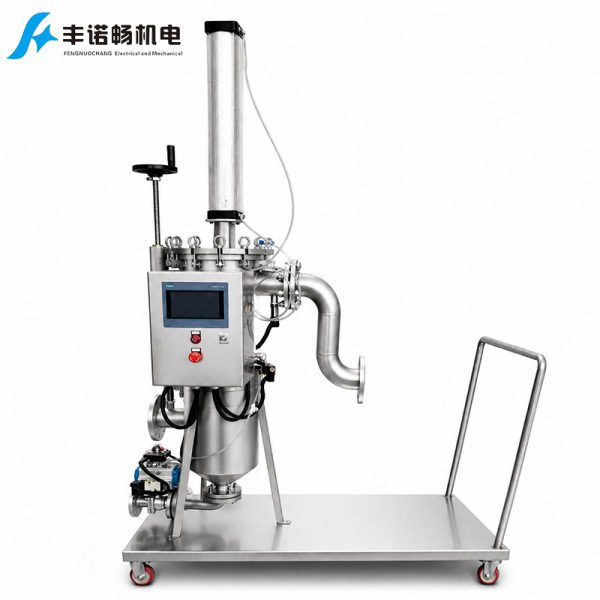
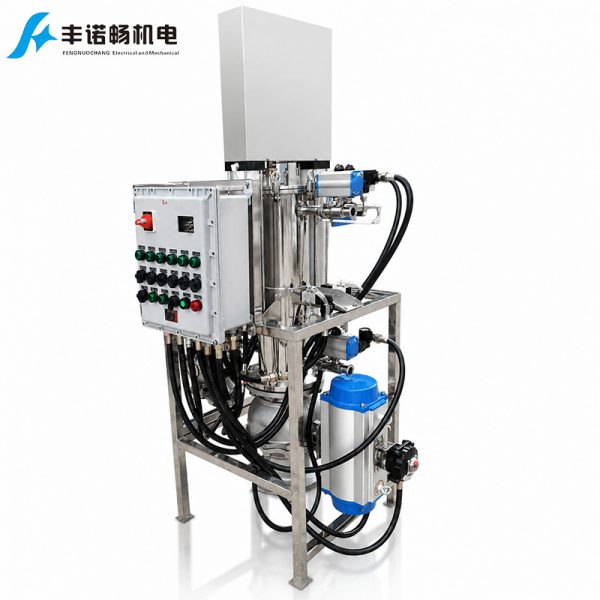
Scraper Self‑Cleaning Filters
Designed for continuous filtration of selected process liquids containing suspended solids, agglomerates, and particulate contaminants.
The scraper continuously removes accumulated material from the filtration surface, helping reduce blockage and frequent manual cleaning.
Suitable applications may include viscous oils, resins, polymers, coatings, and process chemicals, subject to fluid properties and operating conditions. -
Candle Backwash Filters
Provide enclosed solid‑liquid separation with a relatively large filtration area.
Backwashing helps remove accumulated contaminants from the filter elements and restore filtration performance.
Candle filters can be considered for selected process‑liquid clarification, suspended‑solids separation, catalyst‑containing streams, and applications requiring repeated filtration and cleaning cycles. -
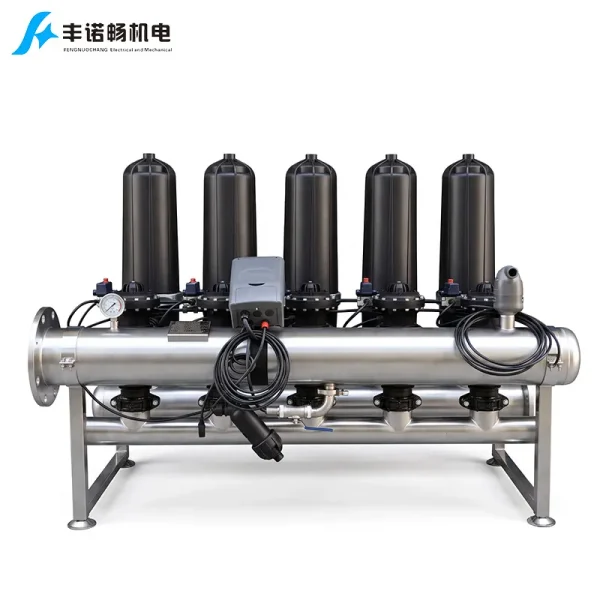
Multi‑Column Backwash Filters
Multiple filter elements provide filtration area and flow capacity. Backwashing removes accumulated solids and can extend element service life in suitable applications.
They can be configured for selected larger‑flow process‑liquid and supporting water‑treatment applications according to operating requirements. -
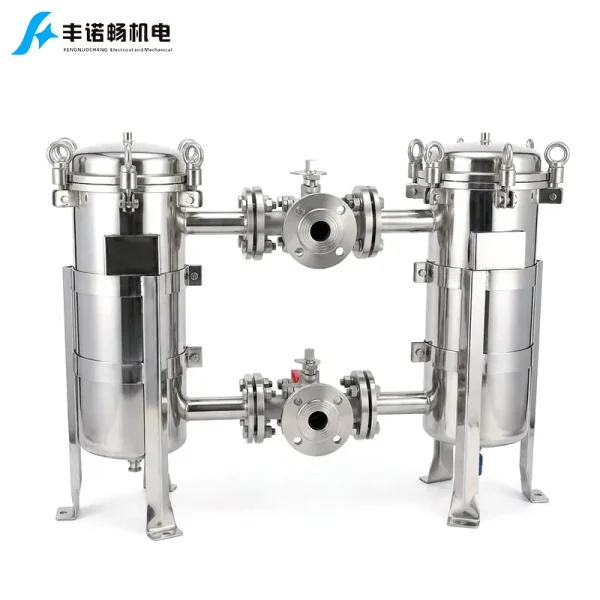
Bag Filters
Provide flexible particulate filtration for a wide range of compatible petrochemical and chemical process liquids.
They can be used for selected amine solutions, glycol fluids, lubricating oils, fuel additives, drilling and injection fluids, and other process streams, depending on liquid compatibility and filtration requirements. -
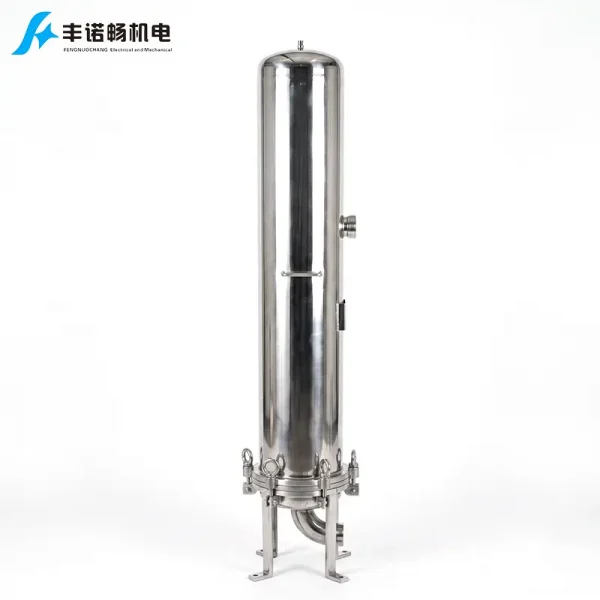
Cartridge Filters
Provide fine particle control where downstream equipment, catalysts, or subsequent processes require lower particulate loading.
Cartridge quantity, length, filter media, and filtration rating can be configured according to required flow capacity and process conditions. -
Leaf Filters
Suitable for selected processes involving higher solids loading, filter aids, activated carbon, catalyst‑containing solids, and solid‑liquid clarification.
Their relatively large filtration area makes them useful where cake formation or process‑solids recovery forms part of the filtration requirement. -
Stacked Filters
Provide a relatively large filtration area within a compact structure and can be used for selected clarification applications involving compatible oils, chemicals, polymers, and other process liquids. -
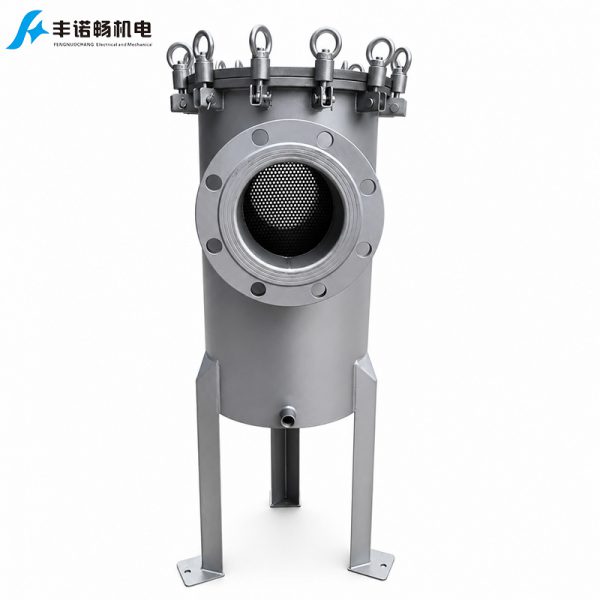
Basket Filters
Provide coarse pipeline protection by intercepting larger solids, scale, debris, and foreign matter before pumps, valves, heat exchangers, and finer filtration equipment. -
Magnetic Filters
Capture ferrous particulate contaminants that may originate from pipelines, pumps, mixers, tanks, and other metallic processing equipment.
They can provide an additional contamination‑control stage for compatible oils, polymers, chemicals, and other process liquids where ferrous contamination is a concern.
CATALYST & CRITICAL EQUIPMENT PROTECTION
Filtration helps protect catalysts, reactors, heat exchangers, pumps, and valves from particulate contamination.
Fine particulate contaminants entering sensitive process stages can accumulate, increase pressure drop, contribute to fouling, and increase maintenance requirements.
-
Primary Particle Reduction
Bag Filters
Reduce higher particulate loading before finer downstream filtration. -
Higher‑Solids Filtration
Candle Backwash Filters
Can be considered for selected solids‑containing streams where enclosed filtration and repeated cleaning are required. -
Fine Particle Control
Cartridge Filters
Provide finer particulate control before sensitive downstream equipment or catalyst‑related processes.
Typical Protection Concept
Process Feed
↓
Primary Filtration
Bag / Candle Filter
↓
Fine Particle Control
Cartridge Filter
↓
Catalytic / Downstream Process
Select the filtration rating according to contaminant characteristics, catalyst specifications, downstream equipment requirements, and process conditions.
AMINE, GLYCOL & PROCESS LIQUID FILTRATION
Circulating amine, glycol, and other compatible process‑liquid systems can accumulate corrosion products, scale, iron‑containing particulates, and other suspended contaminants during operation.
Filtration can help reduce these particulate contaminants and protect downstream process equipment.
-
Amine Filtration
Bag / Cartridge Filters
Bag filtration can provide upstream particulate reduction, while cartridge filtration can provide finer particle control where required.
Equipment configuration and filtration rating should be selected according to the actual solids characteristics and process requirements. -
Glycol & Process Liquids
Bag / Cartridge / Candle Filters
Can be selected for suspended‑contaminant reduction from compatible circulating process liquids. -
Chemical Compatibility Matters
Petrochemical filtration equipment should not be selected according to micron rating alone.
Equipment material, filter media, seals, and connection components should be evaluated according to:
Fluid Composition
Chemical Concentration
Operating Temperature
Operating Pressure
Material Compatibility
Process Requirements
CATALYST & PROCESS SOLIDS SEPARATION
Some petrochemical and chemical processes involve suspended process solids, filter aids, activated carbon, or catalyst‑containing materials that need to be separated from process liquids.
Depending on the process, filtration may also support solids recovery.
-
Leaf Filters
Suitable for selected applications where larger filtration area, cake formation, or solids recovery is required. -
Candle Filters
Provide an enclosed filtration option for selected solids‑bearing process streams where repeated filtration and cleaning cycles are required. -
Stacked Filters
Can provide additional filtration area for selected clarification and process‑solids separation applications. -
Activated Carbon & Filter Aid Separation
Leaf / Candle / Bag Filters
Can be selected after suitable adsorption or treatment processes to separate suspended activated carbon, filter aids, and other treatment solids.
Actual equipment selection depends on solid characteristics, concentration, particle size, filtration media, recovery requirements, and operating conditions.
OILS, POLYMERS & HIGHER‑VISCOSITY LIQUIDS
Viscous hydrocarbons, lubricating oils, polymers, resins, and other process liquids can create very different filtration conditions from water or lower‑viscosity fluids.
As contaminants accumulate on a static filtration surface, differential pressure can increase and filtration capacity can decrease.
-
Scraper Self‑Cleaning Filters
The scraper removes accumulated solids from the filtration surface during operation, helping control blockage in suitable viscous or solids‑containing liquids.
Typical applications can include:
Process Oils
Lubricating Oils
Resins
Polymer Liquids
Coating Materials
Selected Hydrocarbon Streams
Higher‑Viscosity Chemical Liquids -
Upstream Coarse Filtration
Bag / Basket Filters
Can provide upstream protection where larger particulate contaminants need to be removed before self‑cleaning or finer filtration equipment.
PRODUCT TRANSFER & DOWNSTREAM PROTECTION
Petrochemical products and process liquids can pick up particulate contamination during production, storage, blending, and transfer.
Filtration during storage, blending, and transfer helps control particulate contamination and protect downstream equipment.
-
Fuel & Hydrocarbon Products
Bag / Cartridge Filters
Provide particle control during selected product‑transfer and downstream processing applications. -
Lubricating Oils
Bag / Cartridge / Scraper Self‑Cleaning Filters
Can be selected according to oil viscosity, contaminant loading, and required particle control. -
Chemical Intermediates
Bag / Cartridge / Stacked Filters
Provide different filtration options according to particulate loading and downstream process requirements.
COOLING & CIRCULATING WATER FILTRATION
Petrochemical facilities can operate large utility‑water systems serving heat exchangers, compressors, cooling towers, pumps, and other equipment.
These systems typically require:
High Flow Capacity | Automatic Cleaning | Continuous Operation
-
Brush Self‑Cleaning Filters
Automatically remove suspended particulate contaminants from circulating water while reducing frequent manual screen cleaning. -
Suction Self‑Cleaning Filters
Use automatic suction cleaning for continuous filtration of suitable lower‑viscosity utility‑water systems. -
Disc Backwash Filters
Provide automatic particle interception and repeated backwashing for selected circulating‑water applications. -
Multi‑Media Backwash Filters
Reduce sediment, suspended solids, and turbidity before downstream water‑treatment processes. -
Basket Filters
Provide simple coarse protection before pumps, heat exchangers, and other downstream equipment.
PETROCHEMICAL WASTEWATER & WATER REUSE
Refineries and petrochemical facilities can generate wastewater containing combinations of suspended solids, oil, scale, corrosion products, chemicals, and dissolved contaminants.
Filtration is one stage of wastewater treatment. Additional treatment may be required for dissolved contaminants and other pollutants.
-
Coarse & High‑Solids Pretreatment
Self‑Cleaning / Basket Filters
Reduce larger suspended contaminants and debris before subsequent treatment. -
Oil‑Containing Wastewater
Oil‑Water Separation Equipment
Can be used for selected oil‑containing wastewater streams where the oil condition is suitable for the separation technology.
Actual separation performance depends on oil state, droplet characteristics, wastewater composition, temperature, flow conditions, and equipment configuration.
Emulsified or dissolved contaminants may require additional treatment. -
Suspended Solids & Turbidity Reduction
Candle Backwash / Multi‑Media Filters
Provide additional suspended‑solids and turbidity control before finer downstream treatment. -
Membrane Protection
Bag / Cartridge Filters
Reduce residual particulate loading before downstream membrane‑treatment stages. -
Water Reuse
UF / RO Systems
Can provide subsequent membrane treatment after appropriate upstream pretreatment where the required water‑quality target calls for finer separation.
Typical Water‑Reuse Concept
Petrochemical Wastewater
↓
Coarse Pretreatment
↓
Oil‑Water Separation, if required
↓
Suspended‑Solids Reduction
↓
Fine Particle Filtration
↓
UF / RO or Further Treatment
↓
Water Reuse / Further Processing
The actual treatment sequence should be determined according to wastewater composition and the required treatment objective.
A MULTI‑STAGE FILTRATION APPROACH
Multiple filtration stages can distribute contaminant loading and reduce the burden on downstream filters.
Process Liquid
↓
Coarse Protection
Basket Filter
Larger debris, scale & foreign matter
↓
Primary Particle / Solids Reduction
Bag / Scraper / Candle Filter
Suspended solids, agglomerates & process particles
↓
Fine Particle Control
Cartridge Filter
Residual particulate reduction
↓
Downstream Equipment / Process
Catalyst / Heat Exchanger / Pump / Storage / Transfer / Further Processing
This sequence illustrates a possible configuration. The required stages depend on the application.
Some applications need one stage; others require several, depending on fluid properties, solids loading, particle size, viscosity, and downstream requirements.
ENGINEERED FOR PETROCHEMICAL OPERATING CONDITIONS
-
Higher‑Viscosity Liquid Filtration
Scraper self‑cleaning filters can be considered where viscosity and solids accumulation cause frequent screen blockage. -
Automatic Cleaning & Backwashing
Automatic cleaning and backwashing can reduce manual maintenance in suitable industrial applications. Cleaning performance depends on the equipment design and process conditions. -
Coarse‑to‑Fine Particle Control
Basket, bag, candle, stacked, and cartridge technologies can be combined where multi‑stage particulate reduction is required. -
Material & Seal Compatibility
Available materials depend on filter type.
Select equipment materials, filter media, seals, and connections according to fluid composition, concentration, temperature, pressure, corrosion conditions, and compatibility requirements. SS304 and SS316L configurations and sealing options depend on filter type and application. -
Higher‑Capacity Configurations
Multi‑bag, multi‑cartridge, multi‑column, and parallel filtration configurations can be designed for selected higher‑capacity industrial processes. -
Customized Process Configuration
Filtration area, vessel size, element quantity, filtration rating, cleaning method, materials, pressure rating, and connections can be configured for the process.
SELECT FILTRATION EQUIPMENT BASED ON YOUR PROCESS CONDITIONS
Petrochemical filtration equipment should not be selected according to pipe diameter and micron rating alone.
A low‑viscosity circulating process liquid and a high‑viscosity polymer stream may require very different equipment even when their particle‑control objectives appear similar.
For more accurate equipment selection, please provide:
- Process Medium
Hydrocarbon / Amine / Glycol / Oil / Resin / Polymer / Chemical / Water / Other - Application / Filtration Stage
- Main Contaminants
- Particle Size & Solids Concentration
- Required Flow Rate
- Target Micron Rating
- Viscosity & Operating Temperature
- Operating Pressure
- Material / Seal / Connection Requirements
- Upstream & Downstream Process
- If available, please also provide your current filtration method and the main filtration problem you want to solve.
Based on your process information, Fengnuochang can recommend a filter type, media, filtration area, materials, cleaning method, and system configuration.
DISCUSS YOUR PETROCHEMICAL FILTRATION REQUIREMENTS
Send us your process medium, main contaminants, flow rate, target micron rating, pressure, temperature, and any known viscosity or compatibility requirements. If these details are unavailable, describe your liquid and filtration problem. Our engineers can help identify the information needed for equipment selection.