Resin Paint & Coating
Introduction
Resins, paints, coatings, inks, and adhesives may contain unwanted gels, agglomerates, fibers, and foreign particles. These contaminants can block filters, damage equipment, or create defects during filling and application. Fengnuochang provides filtration equipment configured for liquid viscosity, contaminant loading, flow rate, operating conditions, and product requirements. Filtration should remove unwanted particles while preserving useful formulation solids.

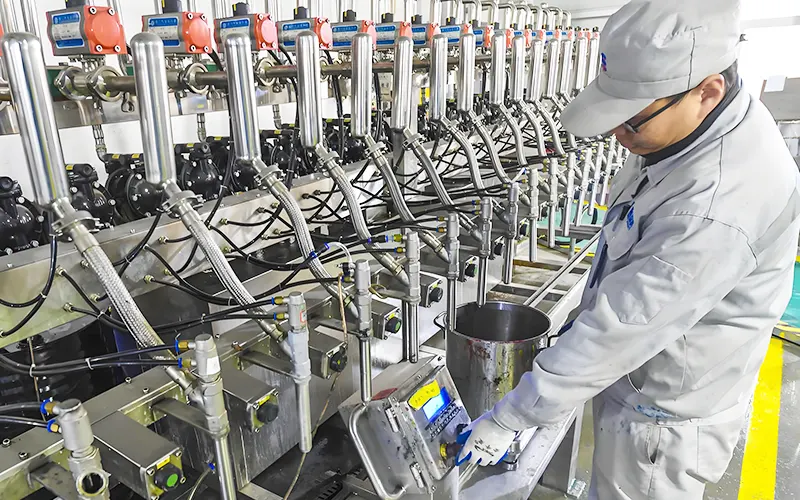
UNDERSTANDING RESIN & PAINT FILTRATION
Selecting filtration equipment for resin, paint, or coating production should not be based on micron rating alone.
Liquids with the same target micron rating may need different filtration areas and cleaning methods because their viscosity, solids loading, and particle characteristics differ.
Before selecting a system, consider:
How viscous is the liquid?
What unwanted particles need to be removed?
What formulation solids need to remain in the product?
How quickly does the filtration surface become blocked?
Is continuous or batch production required?
These factors help determine the suitable filter type, filtration area, media, and cleaning method.
CORE FILTRATION EQUIPMENT FOR RESIN & PAINT PROCESSING
-
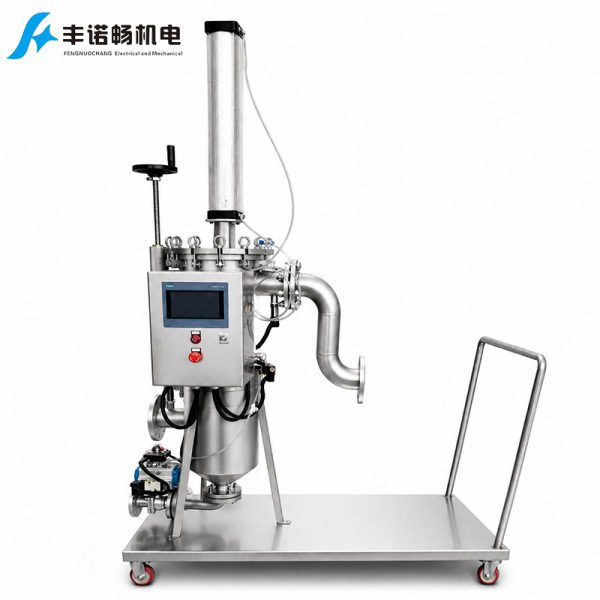
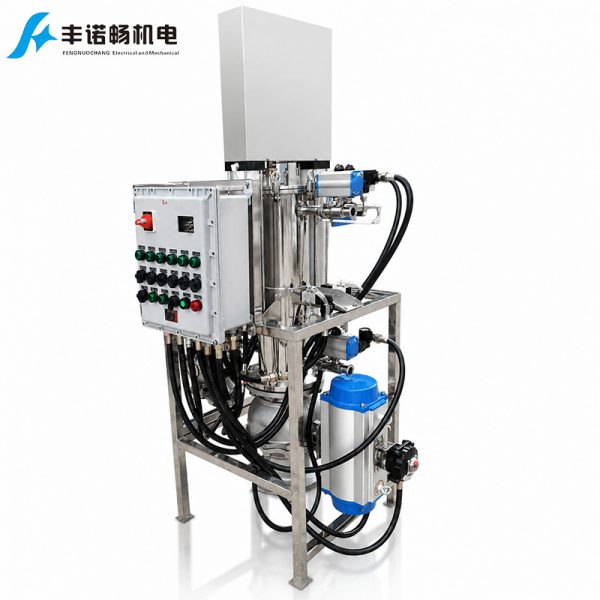
Scraper Self‑Cleaning Filters
Scraper self‑cleaning filters can be considered for viscous, solids‑containing, or clogging‑prone process liquids.
A mechanical scraper removes accumulated contaminants from the filtration surface during operation, helping maintain effective filtration area and reduce rapid blockage.
This technology can be considered for selected liquids containing:
Gels
Agglomerates
Soft Contaminants
Suspended Particles
Relatively High Contaminant Loads
Applications may include resins, coatings, adhesives, inks, and varnishes, subject to fluid compatibility and operating conditions. -
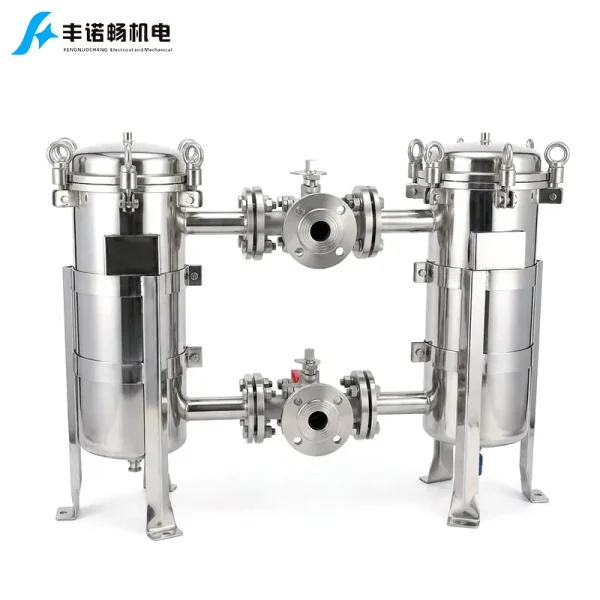
Bag Filters
Bag filters provide flexible and economical particle filtration for paints, coatings, resins, inks, and related chemical products.
Select bag materials and micron ratings to remove unwanted agglomerates, gels, fibers, and oversized particles while preserving the required formulation solids.
Bag filtration can be used during intermediate processing, circulation, transfer, and before filling or downstream processing. -
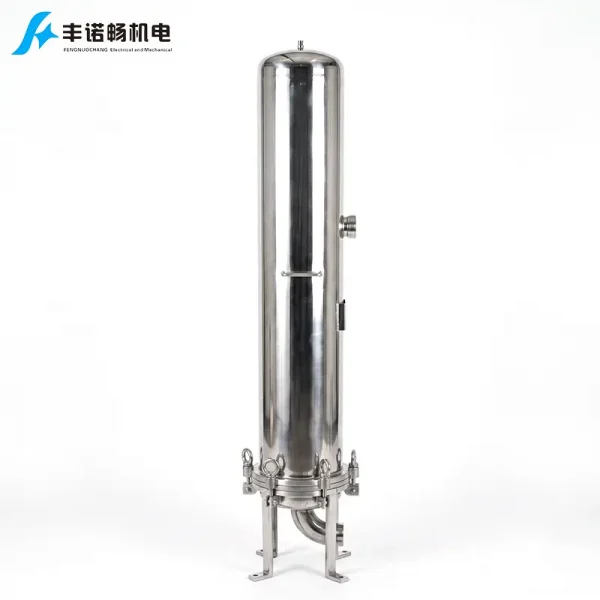
Cartridge Filters
Cartridge filters are suitable for finer particle‑control applications after most larger contaminants have already been reduced.
Suitable applications may include compatible resins, coatings, and varnishes with lower solids loading that require finer particle control.
For highly viscous or higher‑solids liquids, suitable upstream filtration is important to reduce rapid cartridge blockage. -
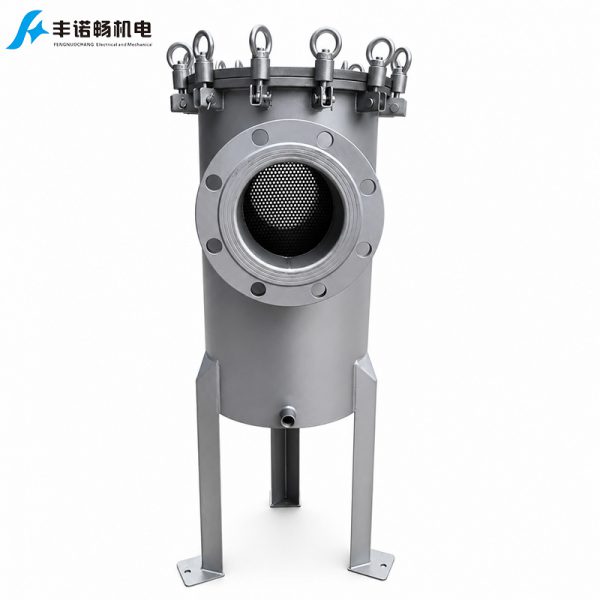
Basket Filters
Basket filters provide coarse upstream protection by intercepting larger foreign matter and agglomerates before they enter pumps, mixers, transfer lines, and finer filtration equipment. -
Candle Filters
Candle filters provide enclosed solid‑liquid separation with a relatively large filtration area.
They can be considered for selected compatible resin, coating, and chemical process liquids where clarification, suspended‑solids separation, or repeated filtration and cleaning cycles are required. -
Leaf Filters
Leaf filters are suitable for selected resin and chemical processes involving higher solids loading, activated carbon, filter aids, or other suspended treatment materials.
Their filtration area and cake formation can support clarification or solids recovery in suitable processes. -
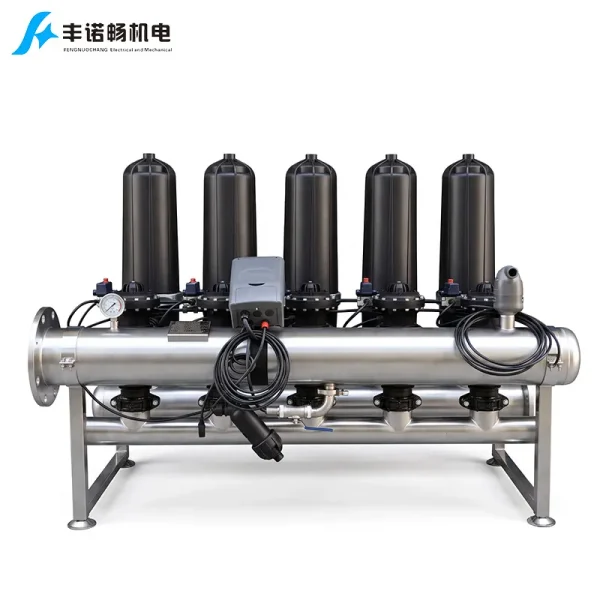
Stacked Filters
Stacked filters provide a relatively large filtration area within a compact structure and can be configured with different filtration media for selected clarification and polishing applications. -
Magnetic Filters
Magnetic filters provide an additional contamination‑control stage where ferrous particles may enter the product from mixers, pipelines, pumps, tanks, grinding equipment, and other production machinery.
MOBILE & TRANSFER FILTRATION
Mobile filtration can support production lines that need flexible transfer between mixing, storage, and filling stages.
-
Diaphragm Pump + Filtration System
Diaphragm pumps can be combined with filters in compact or mobile systems for suitable transfer applications.
This configuration can be considered for selected coatings, paints, inks, and compatible process liquids where flexible transfer filtration is required.
THREE MAIN FILTRATION CHALLENGES
Three common challenges influence equipment selection: unwanted gels and agglomerates, viscosity and blockage, and defects in the finished product.
-
CHALLENGE 01 GELS AND AGGLOMERATES
Resin reactions, pigment dispersion, storage, temperature changes, and material handling can generate unwanted:
Gels | Agglomerates | Skin | Oversized Clusters | Partially Reacted Material
These contaminants can create visible defects or interfere with downstream coating, filling, spraying, and application equipment.Recommended Filtration:
Scraper Self‑Cleaning Filters — Suitable for continuous removal of accumulated contaminants from selected viscous and clogging‑prone liquids.
Bag Filters — Provide flexible interception of gels, agglomerates, fibers, and larger unwanted particles.
Basket Filters — Provide upstream protection against larger foreign matter and coarse agglomerates.
Typical Filtration Concept
Mixing / Reaction
↓
Coarse Protection
Basket Filter
↓
Continuous Process Filtration
Scraper Self‑Cleaning Filter
↓
Intermediate Particle Filtration
Bag Filter
↓
Transfer / Further Processing
Not every process requires all three filtration stages. The actual configuration depends on contaminant loading, viscosity, flow capacity, and finished‑product requirements.
-
CHALLENGE 02 HIGH VISCOSITY AND FILTER BLOCKAGE
Viscosity directly affects filtration resistance, pressure drop, and achievable flow capacity.
Higher viscosity can increase pressure drop and reduce achievable flow through the same filtration area.
Evaluate viscosity, operating temperature, filtration area, micron rating, and allowable pressure drop together.Scraper Self‑Cleaning Filtration
In suitable applications, the scraper removes accumulated contaminants during operation.
This can help:
Maintain Effective Filtration Area
Reduce Screen Blockage
Extend Cleaning Intervals
Reduce Manual Intervention
Support Continuous Filtration
For extremely viscous liquids, equipment dimensions, connection size, filtration area, operating temperature, and pumping conditions should be evaluated together. -
CHALLENGE 03 FINISHED PRODUCT DEFECTS
Small unwanted particles can become much more noticeable after paint, resin, varnish, ink, or coating materials are applied.
Particulate contamination may contribute to:
Surface Specks
Coating Defects
Nozzle Blockage
Uneven Application
Visible Impurities
Downstream Equipment Fouling
Filtration before filling or application helps control these particles.Recommended Filtration:
Bag Filters — General particle, gel, and agglomerate control.
Cartridge Filters — Finer downstream particle control after suitable upstream filtration.
Stacked Filters — Clarification and polishing for selected compatible liquids.
Magnetic Filters — Additional ferrous contaminant control where metallic wear particles are a concern.
FILTRATION FOR DIFFERENT RESIN & COATING PRODUCTS
Equipment selection depends on product viscosity, formulation solids, unwanted contaminants, and downstream requirements.
-
Synthetic Resins
Key filtration considerations include gels, partially reacted materials, viscosity, reaction residues, and suspended contaminants. -
Industrial Paints & Coatings
Filtration should reduce unwanted agglomerates and foreign particles without unnecessarily removing useful pigments, fillers, or other intentional formulation solids. -
Printing Inks
Important considerations include agglomerates, foreign particles, and equipment‑generated contaminants that may affect printing equipment or finished print quality. -
Adhesives & Sealants
Higher viscosity and gel formation can make filter blockage, filtration area, and flow capacity particularly important. -
Varnishes & Clear Coatings
Visual clarity and fine particle control can become more important because unwanted contaminants may be visible in the finished coating. -
Chemical Intermediates
Selected chemical intermediates may require clarification, activated‑carbon separation, filter‑aid removal, or other solid‑liquid separation.
FROM MIXING TANK TO FINISHED PRODUCT
Filtration can be installed at different stages of resin and coating production, depending on where unwanted particles enter or form.
Raw Materials
↓
Mixing / Dispersion / Reaction
↓
Coarse Protection
Basket Filter
Large foreign matter & coarse agglomerates
↓
Continuous Process Filtration
Scraper Self‑Cleaning Filter
Gels, agglomerates & suspended contaminant control
↓
Intermediate Filtration
Bag Filter
Residual particulate reduction
↓
Fine Particle Control — When Required
Cartridge / Stacked Filter
Finer downstream particle control
↓
Filling / Coating / Further Processing
For higher‑viscosity liquids, fewer filtration stages with appropriately sized filtration areas may be more practical than installing multiple unnecessarily fine filters.
The actual filtration sequence should be selected according to the product formulation, viscosity, solids loading, contaminant characteristics, and downstream requirements.
DIFFERENTIAL PRESSURE & FILTER LOADING
ΔP — Differential Pressure
Differential pressure is an important operating indicator in industrial filtration.
Accumulated contaminants can increase filtration resistance. Monitoring inlet and outlet pressure helps identify when cleaning or filter‑media replacement may be needed.
For resin and coating applications, differential pressure should be considered together with liquid viscosity, operating temperature, flow rate, filtration area, and filter‑media condition.
SELF CLEANING FILTRATION FOR VISCOUS LIQUIDS
Conventional static filtration allows contaminants to accumulate on the filtration surface until the filter media is cleaned or replaced.
Scraper self‑cleaning filters remove accumulated contaminants from the screen during operation and discharge the collected material according to the equipment design. In suitable viscous or clogging‑prone liquids, this can reduce blockage and manual cleaning.
Select the screen rating, cleaning method, and discharge settings to maintain the required flow and particle control.
FILTRATION CONFIGURED FOR YOUR FLUID
-
High‑Viscosity Process Capability
Filtration area, vessel and connection size, pumping conditions, and operating temperature should match liquid viscosity and required capacity. -
Continuous Self‑Cleaning
Scraper filtration provides an alternative to frequent manual screen cleaning in suitable clogging‑prone applications. -
Flexible Bag Filtration
Bag filters provide practical particle filtration for liquids containing gels, agglomerates, and suspended contaminants. -
Fine Downstream Particle Control
Cartridge and stacked filters can provide finer particle control after suitable upstream filtration, subject to media compatibility and product requirements. -
Multiple Solid‑Liquid Separation Options
Candle and leaf filtration provide additional options where clarification, activated carbon, filter aids, or higher solids loads are involved. -
Customized Filtration Configuration
Filtration area, vessel size, media, micron rating, materials, connections, pressure rating, cleaning method, and system arrangement can be configured for the process.
SELECTING EQUIPMENT FOR YOUR PROCESS
A micron rating alone is insufficient for equipment selection.
Viscosity and solids characteristics also affect filtration area, pump requirements, equipment design, and cleaning method.
For more accurate equipment selection, please provide:
- Product Type
Resin / Paint / Coating / Ink / Adhesive / Varnish / Other - Liquid Viscosity & Operating Temperature
- Main Contaminants
Gels / Agglomerates / Fibers / Foreign Particles / Other - Approximate Particle Size & Solids Concentration
- Required Flow Rate
- Target Micron Rating
- Operating Pressure
- Chemical Composition / Material Compatibility
- Connection & Process Requirements
- If available, please also tell us your current filtration method and the main problem you want to solve, such as:
Frequent Filter Blockage
Insufficient Flow Capacity
Short Filter‑Media Life
Frequent Manual Cleaning
Finished‑Product Defects
Based on these process conditions, Fengnuochang can recommend a suitable filter type, filtration area, filter media, cleaning method, equipment size, and system configuration.
DISCUSS YOUR RESIN PAINT AND COATING FILTRATION REQUIREMENTS
Send us your product type, flow rate, target micron rating, pressure, temperature, and any known viscosity or compatibility requirements. If these details are unavailable, describe your liquid and filtration problem. Our engineers can help identify the information needed for equipment selection.