Fruit and Vegetable Juice
Introduction
Fruit and vegetable juices may contain seeds, skin fragments, coarse pulp, fibers, suspended particles, and other unwanted material after extraction or blending. These solids can increase filter loading, obstruct transfer and filling equipment, or affect the appearance and texture of the finished product.
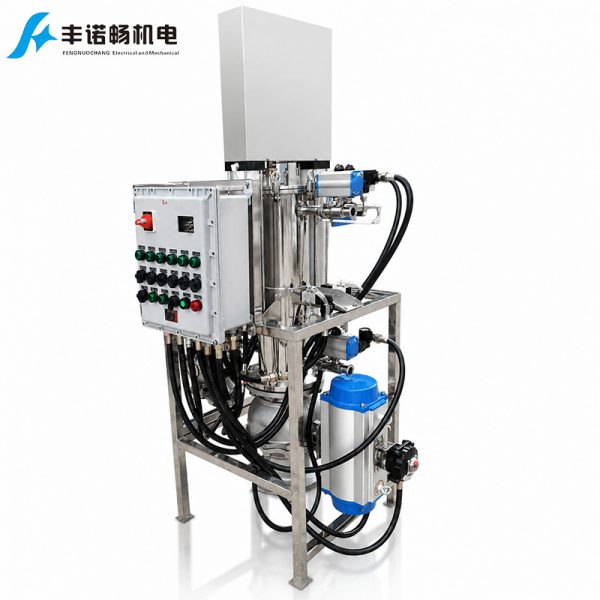
Fengnuochang provides filtration equipment for juice processing, configured according to product type, pulp content, viscosity, flow rate, operating conditions, and the required separation. The objective may be to produce a clear juice, control oversized particles, or protect equipment while retaining the desired pulp and natural cloud.
UNDERSTANDING JUICE FILTRATION
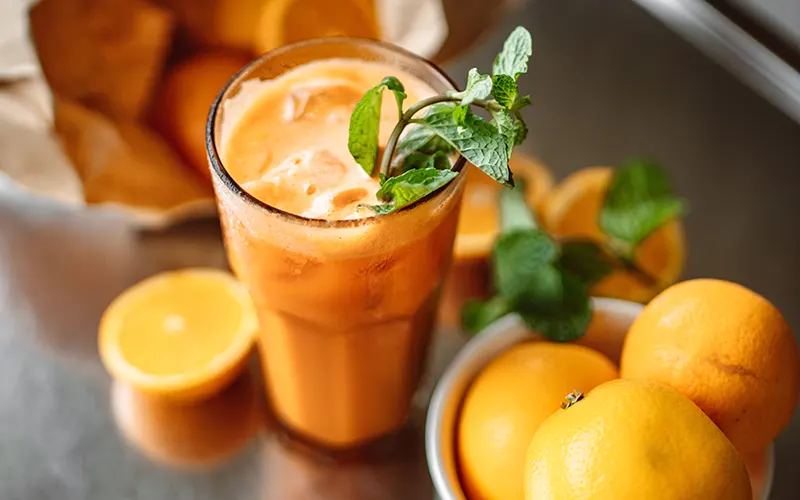
The clearest juice is not always the required product. Clear apple juice and a pulpy vegetable blend can have very different separation requirements.
Before selecting a filter, consider:
* Which particles need to be removed?
* How much pulp or natural cloud should remain?
* Is the product intended to be clear, cloudy, or pulpy?
* Does the liquid contain long fibers or soft, deformable solids?
* Is filtration required after extraction, during transfer, or before filling?
A micron rating alone cannot answer these questions. Selection should also consider solids loading, viscosity, temperature, filtration area, and the required product yield.
CORE FILTRATION EQUIPMENT FOR JUICE PROCESSING
- Basket Filters
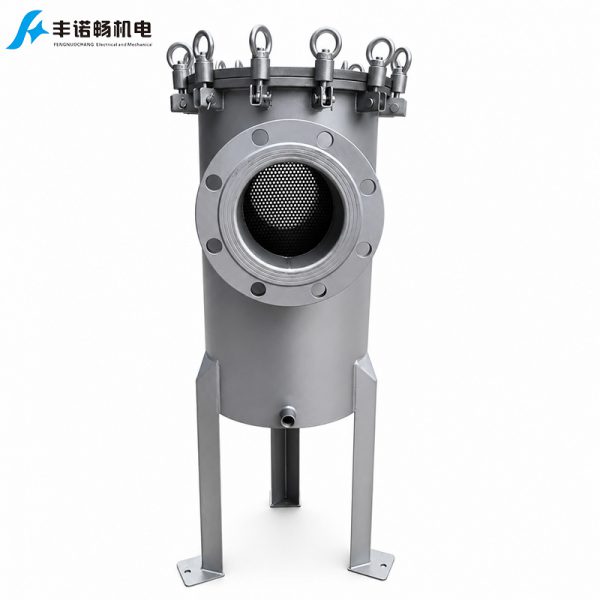
Provide coarse protection by intercepting larger particles before pumps, transfer lines, and finer filters. Suitable applications may include removal of seed fragments, skin pieces, and coarse foreign matter after the main extraction or finishing stage.
A basket filter is not a substitute for a juice extractor or dedicated pulp finisher. Screen openings should match the particles to be removed and the pulp that must remain. - Bag Filters
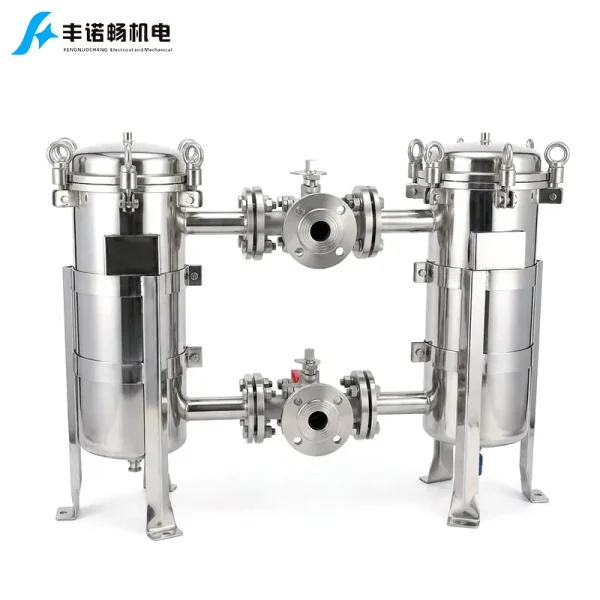
Provide flexible particle filtration during intermediate processing, blending, transfer, or before filling. Bag materials and ratings can be selected for unwanted fibers, coarse pulp fragments, and oversized particles in compatible juices.
High pulp loading can shorten bag service life. A larger filtration area or suitable upstream separation may be required. Finer bags can also retain desired product solids, so selection should be based on the finished‑product target. - Scraper Self Cleaning Filters
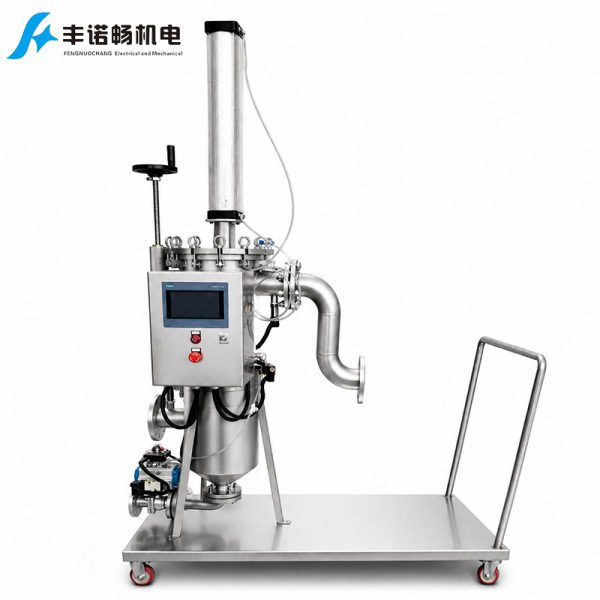
A mechanical scraper removes accumulated solids from the screen during operation. This can reduce manual screen cleaning in suitable clogging‑prone juices and juice bases.
Suitability depends on the consistency of the solids. Long fibers, sticky pulp, and deformable particles may behave differently from hard particles. Trials should evaluate screen blockage, solids discharge, product loss, and pulp changes. - Cartridge Filters
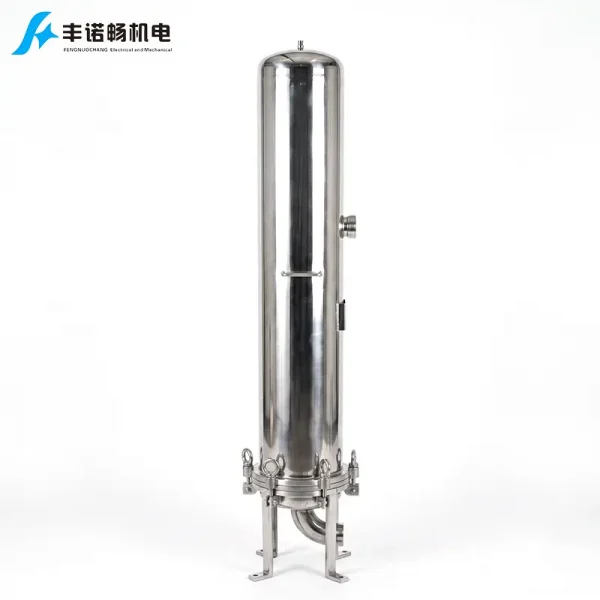
Can provide finer particle control for suitably pretreated juices with lower solids loading. They may be considered for polishing a clarified stream or protecting a subsequent process.
Raw juice with substantial pulp can block cartridges quickly. The cartridge media, retention characteristics, flow capacity, and food‑contact suitability should be confirmed for the product and cleaning conditions. - Candle Filters
Provide enclosed solid‑liquid separation for selected clarification duties. Applications may include separating suspended treatment solids or filter aids from a compatible juice stream where the process supports cake formation and repeated cleaning.
Filterability, media selection, solids discharge, and cleaning must be evaluated. Candle filtration should not be assumed suitable for every raw or pulpy juice. - Leaf Filters
Can be considered for selected clarification processes involving filter aids or suspended treatment solids. Their filtration area and cake formation can support separation where screening alone does not meet the required clarity.
Filter‑aid use, product losses, cake handling, and cleaning requirements should be assessed as part of the process. - Stacked Filters
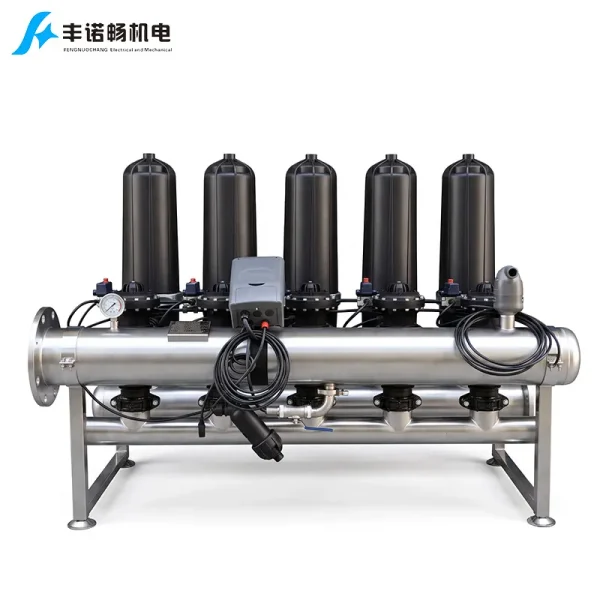
Provide filtration area within a compact arrangement and can be configured with suitable media for selected clarification or polishing applications.
Select media according to particle retention, product compatibility, solids loading, and cleaning or replacement requirements. - Membrane Filtration
Juice‑specific microfiltration or ultrafiltration may be considered when conventional particle filtration does not achieve the required clarification. Membrane selection requires evaluation of the juice, pretreatment, fouling, cleaning, and the intended permeate and retained streams.
A membrane system designed for water treatment should not be assumed suitable for juice processing. Product contact, membrane compatibility, hygienic design, and process performance must be assessed separately.
THREE COMMON JUICE FILTRATION CHALLENGES
- CHALLENGE 01 COARSE PULP AND FIBERS
Coarse pulp, skin fragments, and fibers can accumulate rapidly on filtration surfaces. Solids loading may vary with raw material, extraction settings, and production batch.
Basket filters can provide initial coarse protection. Bag filters can reduce unwanted particles during transfer. Scraper filters may help manage screen loading in suitable applications.
Removing the largest solids upstream can reduce the burden on finer filters. The selected screen must still allow the desired pulp fraction to pass. - CHALLENGE 02 HAZE AND CLARIFICATION
A juice can remain cloudy after visible particles have been removed. Fine suspended material and colloidal components can contribute to haze that a coarse screen or ordinary bag filter does not resolve.
For a clear‑juice product, the process may require suitable enzymatic treatment, settling, centrifugation, or membrane separation in addition to particle filtration. The required combination depends on the juice and clarity target.
For naturally cloudy products, the same haze may be an intended characteristic. Clarification should be chosen only when it supports the finished‑product specification. - CHALLENGE 03 BLOCKAGE AND PRODUCT LOSS
Soft pulp can form a compressible layer on the filter surface, increasing resistance and reducing flow. Selecting a finer rating without considering pulp loading can increase cleaning frequency and product retention.
Evaluate filtration area, flow rate, temperature, solids concentration, pressure drop, and cleaning method together. Trial filtration should also measure juice recovery and the amount of acceptable product discharged with the retained solids.
DIFFERENT JUICES REQUIRE DIFFERENT FILTRATION
- Apple and Pear Juice
Clear products may require clarification beyond coarse screening. Cloudy products need a different approach that controls unwanted particles while retaining the desired suspended material. - Citrus Juice
Pulp level and natural cloud are important product characteristics. Filtration should target unwanted coarse material without unintentionally changing the required pulp content or appearance. - Grape and Berry Juice
Selection should consider seed and skin fragments, fine suspended material, and the desired clarity. The filter should be assessed for its effect on product recovery and appearance. - Pineapple and Other Fibrous Juices
Fibers can bridge screen openings or form a mat. Screen geometry, filtration area, upstream separation, and the cleaning mechanism are important trial parameters. - Carrot Tomato and Vegetable Blends
Suspended solids may contribute to the intended body and texture. A filter chosen to remove all visible solids may change the product substantially. Define the maximum acceptable particle size and the solids that must remain. - Juice Concentrates and Blended Bases
Viscosity and solids loading may differ substantially from those of single‑strength juice. Use the actual filtration temperature and product concentration when assessing capacity and pressure drop.
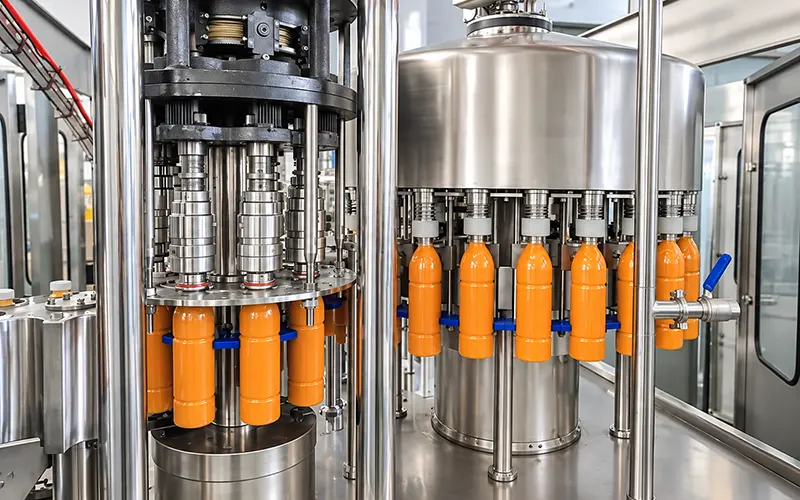
FROM EXTRACTION TO FILLING
Two possible routes illustrate how the product target changes filtration selection.
Route A Cloudy or Pulpy Juice
Extraction or Blending → Required Pulp Finishing → Coarse Protection → Optional Particle Filtration → Product Preservation and Filling
Select screens and media to remove unwanted material while preserving the specified pulp and cloud. Not every stage is required, and filter placement depends on the production line.
Route B Clear Juice
Extraction → Coarse Solids Removal → Clarification Treatment as Required → Suitable Solid Liquid Separation → Optional Polishing → Product Preservation and Filling
Clarification may involve enzymes, settling, centrifugation, filter‑aid filtration, or membranes according to the product. This is a conceptual route rather than a fixed recipe.
Filtration is one part of juice processing. Ordinary basket, bag, scraper, or depth filtration does not by itself establish microbiological safety or shelf life. Any microbial‑retention claim requires a suitable validated process and downstream controls.
DIFFERENTIAL PRESSURE AND FILTER LOADING
Differential pressure is the difference between inlet and outlet pressure. Increasing pressure drop at comparable flow and temperature can indicate accumulated solids or reduced media permeability.
Interpret readings together with viscosity, temperature, flow rate, and the filter condition. Use cleaning or replacement limits specified for the selected equipment and media rather than a universal pressure threshold.
For automatic filters, monitor the frequency of cleaning and discharge as well as pressure drop. Frequent discharge may indicate excessive solids loading or an unsuitable screen selection.
PRODUCT CONTACT AND CLEANING REQUIREMENTS
- Juice filtration equipment should be assessed for food‑contact suitability and cleanability. Vessel material alone does not establish hygienic performance.
Consider the wetted surfaces, seals, filter media, drainage, connections, access for inspection, and compatibility with the juice and cleaning chemicals. Confirm whether cleaning in place is supported by the selected configuration; do not assume every filter can be cleaned effectively without opening.
Cleaning conditions should match the equipment, media, and production process. Where required, confirm applicable food‑contact documentation and cleaning validation before commissioning.
SELECTING EQUIPMENT FOR YOUR PROCESS
For a suitable recommendation, please provide:
- Juice type and production stage
- Clear cloudy or pulpy finished‑product target
- Main unwanted particles and approximate size
- Pulp content or suspended‑solids concentration
- Required flow rate
- Target micron rating if known
- Operating pressure and temperature
- Viscosity or product concentration if available
- Product‑contact and cleaning requirements
- Current filtration method and main problem
A representative sample can help evaluate filterability when particle shape, pulp behavior, or clarity requirements are uncertain. Useful trial results include flow, pressure drop, cleaning frequency, product recovery, and finished‑product appearance.
Based on these conditions, Fengnuochang can recommend a filter type, media, filtration area, cleaning method, and system configuration for further evaluation.
DISCUSS YOUR JUICE FILTRATION REQUIREMENTS
Send us your juice type, flow rate, target micron rating, pressure, and temperature. Please also tell us whether you want a clear product or need to retain pulp.
If these details are unavailable, describe your juice and the problem you want to solve, such as frequent blockage, visible particles, or insufficient flow. Our engineers can help identify the information needed for equipment selection.