Electronics & Semiconductor
Introduction
Electronics and semiconductor facilities use water and process liquids with different contamination levels, filtration objectives, and operating requirements. Particle control supports raw-water pretreatment, membrane protection, high-purity water treatment, cooling-water circulation, compatible process-liquid filtration, and wastewater treatment. Fengnuochang provides industrial filtration and water-treatment equipment selected according to the installation point, incoming water quality, contaminants, target micron rating, flow rate, material compatibility, and downstream requirements.
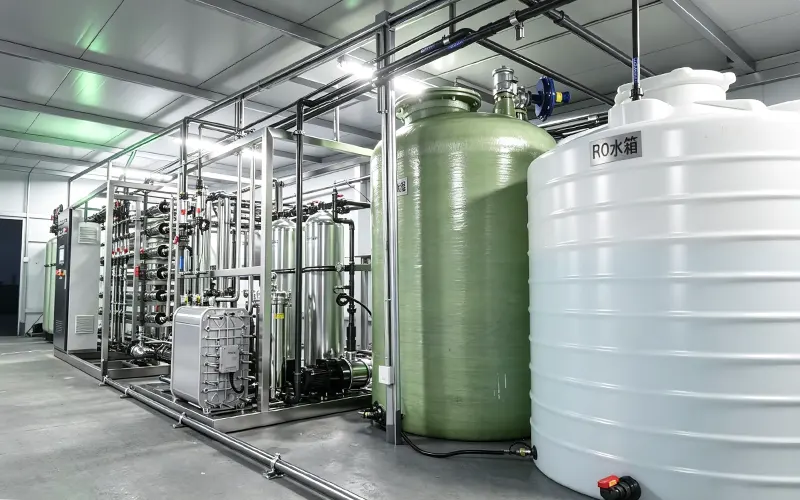
RAW WATER PRETREATMENT
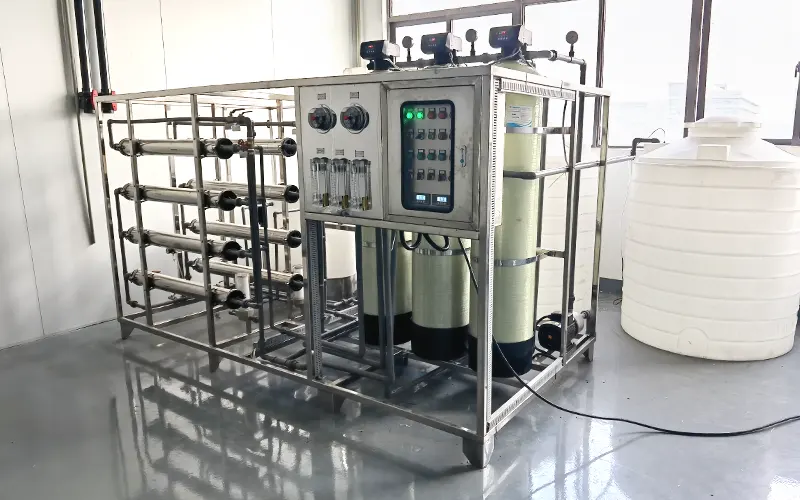
Before raw water enters RO, UF, ion‑exchange, or other downstream purification stages, sediment, rust, suspended solids, and larger particulate contaminants should be reduced to help protect subsequent water‑treatment equipment.
MAIN FILTER TYPES
-
Multi‑Media Backwash Filters
Suitable for reducing suspended solids, sediment, and turbidity during upstream water treatment.
Automatic backwashing helps restore filtration performance and reduce frequent manual maintenance. -
Shallow Sand Backwash Filters
Shallow sand filters reduce sediment and suspended particles in raw‑water treatment, including suitable applications with high flow rates. -
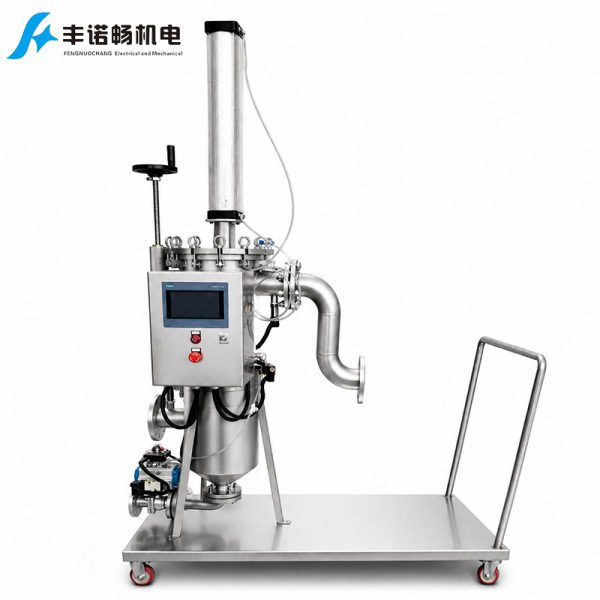
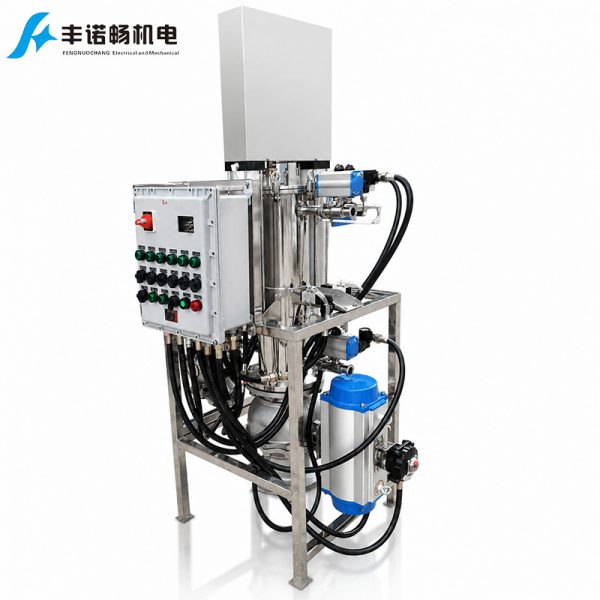
Automatic Self‑Cleaning Filters
Suitable for continuous pretreatment of plant water containing suspended solids.
Brush, scraper, or suction cleaning mechanisms can be selected according to contaminant characteristics, solids loading, flow rate, and operating conditions. -
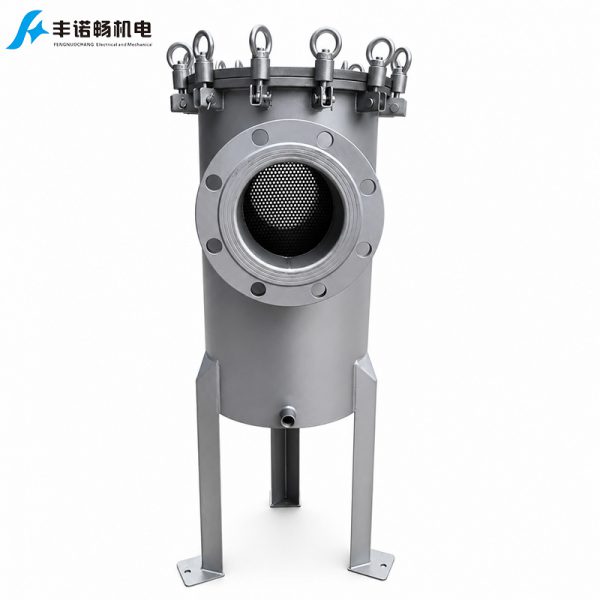
Basket Filters
Provide coarse pipeline protection by intercepting larger debris and foreign matter before they reach pumps and downstream treatment equipment.
RO & UF PRETREATMENT
RO and UF systems are important components in multi‑stage water‑treatment processes. Excessive particulate loading upstream can increase membrane fouling and maintenance requirements.
-
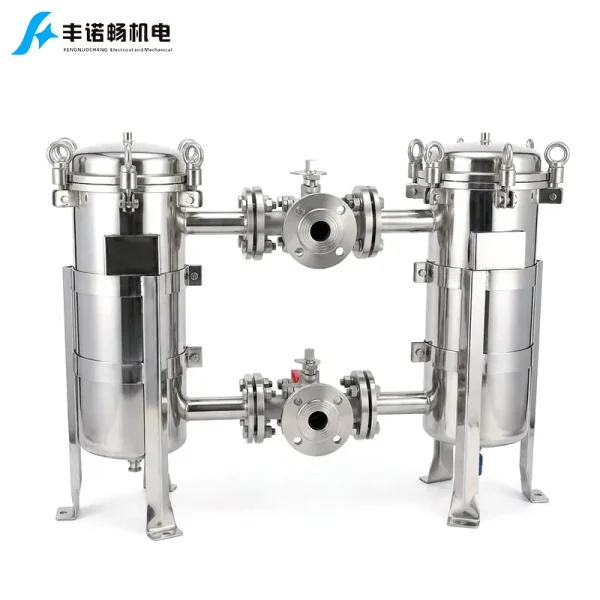
Bag Filters
Provide economical intermediate particle removal before finer water‑treatment stages.
Different filter‑bag materials and micron ratings can be selected according to incoming water quality and particulate loading. -
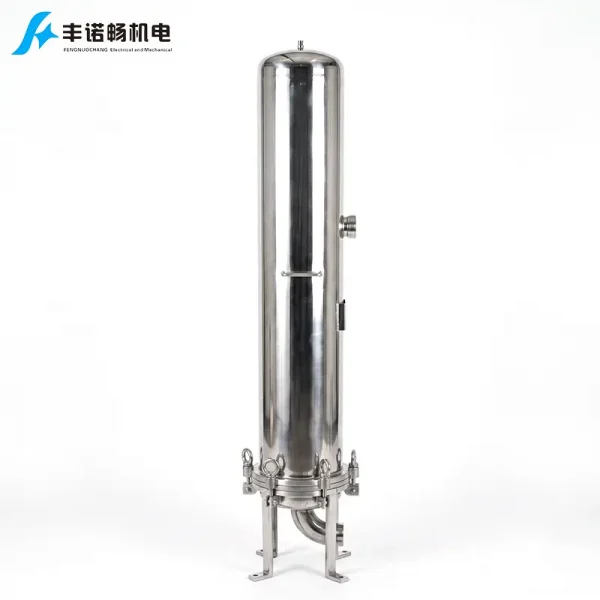
Cartridge Filters
Provide finer particulate control before membrane systems.
Cartridge quantity, length, media, housing size, and micron rating can be selected for the required flow rate and filtration conditions. -
UF Systems
Ultrafiltration can provide additional control of fine suspended matter and colloidal contaminants as part of a multi‑stage water‑treatment process. -
Multi‑Media Filters
Multi‑media filters can reduce suspended solids and turbidity upstream of finer filtration and membrane treatment.
Typical Pretreatment Concept
Raw Water
↓
Multi‑Media / Self‑Cleaning Filtration
↓
Bag / Cartridge Filtration
↓
UF / RO
↓
Further Purification
The actual treatment sequence should be determined according to incoming water quality, downstream membrane requirements, required water quality, and the overall system design.
HIGH‑PURITY WATER SYSTEM SUPPORT
As water moves through progressively finer treatment stages, particulate‑control requirements generally become more demanding.
Fengnuochang filtration equipment can be configured for suitable pretreatment, intermediate filtration, membrane protection, and supporting water‑treatment stages according to the customer's process requirements.
-
Cartridge Filter Housings
Multi‑cartridge housings can be configured with different cartridge quantities, lengths, and media to meet flow and particle‑retention requirements.
They can provide a compact filtration stage before subsequent purification or distribution processes. -
UF Module Systems
UF technology can be incorporated into high‑purity water‑treatment configurations for additional control of fine suspended matter and colloidal contaminants where required by the overall treatment design. -
Water Quality Requirements
Advanced semiconductor high‑purity and ultrapure water systems can require significantly stricter control of particles and other contaminants than conventional industrial water‑treatment systems.
Final treatment and filtration components for critical semiconductor process water should therefore be selected according to the customer's required water specification and overall process design.
Select Fengnuochang equipment for the intended treatment stage and customer specifications. Suitability for critical high‑purity or ultrapure water service requires evaluation of the complete housing, filter element, seals, connections, and process requirements.
PROCESS LIQUID & CHEMICAL FILTRATION
Electronics and semiconductor production can involve different process liquids and chemical solutions.
Where compatible with the process medium and required cleanliness level, filtration can be used to reduce particulate contaminants before circulation, transfer, or subsequent processing.
-
Cartridge Filters
Cartridge filters remove fine particles from compatible process liquids using elements selected for the required retention rating.
The installed filter element should be selected according to particle characteristics, process requirements, and liquid compatibility. -
Bag Filters
Bag filters can reduce particulate loading in compatible process liquids before finer filtration stages. -
PP / PVDF Cartridge Filter Housings
PP and PVDF cartridge housings offer alternatives where metallic housings are unsuitable and the polymer is compatible with the process liquid.
Material selection should be evaluated according to the actual chemical, concentration, temperature, pressure, filtration requirements, and process conditions. -
Magnetic Filters for Ferrous Contaminant Control
Magnetic filters can provide an additional protection stage where ferrous particulate contamination from upstream equipment, tanks, pumps, or pipelines is a concern.
PROCESS COOLING & UTILITY WATER FILTRATION
Electronics and semiconductor facilities rely on cooling‑water and circulating‑water systems to remove heat from production and facility equipment.
Suspended particles, corrosion products, and other contaminants can affect heat exchangers, pipelines, valves, pumps, and cooling equipment.
Automatic filtration can support high‑flow utility applications where operating conditions and water characteristics are suitable.
-
Brush Self‑Cleaning Filters
Automatically remove suspended particles from suitable circulating‑water systems while reducing frequent manual screen cleaning. -
Suction Self‑Cleaning Filters
Provide automatic screen cleaning for continuous filtration of selected cooling‑water and circulating‑water systems with limited interruption to normal flow. -
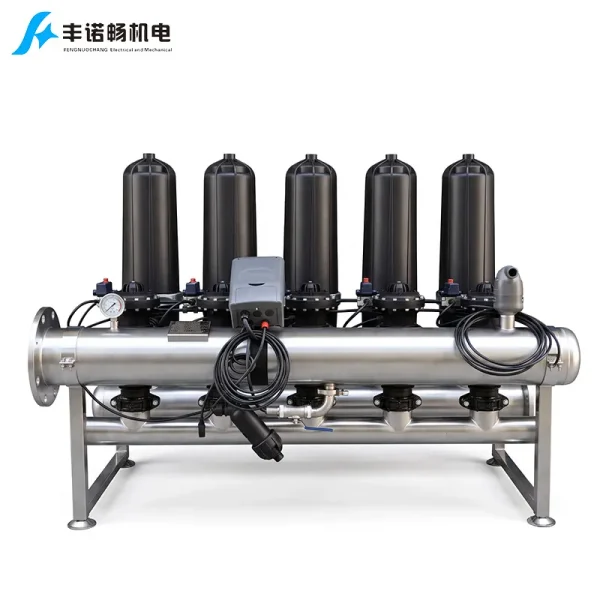
Disc Backwash Filters
Suitable for automatic particulate removal in circulating‑water and supporting water‑treatment systems where repeated backwashing is required. -
Multi‑Column Backwash Filters
Multi‑column backwash configurations offer filtration capacity for centralized water‑treatment and circulation systems.
These automatic filtration technologies are primarily suited to facility utility applications such as cooling water, circulating water, and supporting water‑treatment systems.
ELECTRONICS & SEMICONDUCTOR WASTEWATER FILTRATION
Wastewater characteristics vary with the manufacturing process.
Suspended solids may need to be removed before chemical treatment, membrane treatment, recovery, or water reuse.
-
Self‑Cleaning Filters
Suitable for continuous suspended‑solids reduction in selected higher‑load wastewater streams. -
Candle Backwash Filters
Can be used for selected wastewater streams requiring enclosed solid‑liquid separation and automatic cleaning of the filter elements. -
Multi‑Media Backwash Filters
Provide suspended‑solids and turbidity reduction as part of wastewater‑treatment or water‑reuse pretreatment. -
Bag Filters
Provide flexible intermediate particle removal and downstream equipment protection. -
Cartridge Filters
Provide finer particle control before downstream membrane or water‑reuse treatment stages.
The actual wastewater‑treatment configuration should be based on wastewater composition, contaminant characteristics, treatment objectives, and required discharge or reuse quality.
Filtration is generally one part of a broader treatment process and does not by itself remove all dissolved chemical, ionic, or other contaminants.
FROM UTILITY FILTRATION TO HIGH‑PURITY WATER SUPPORT
Different water systems within the same semiconductor facility can require completely different filtration strategies.
A typical multi‑stage water‑treatment concept may include:
Raw Water
↓
Coarse & Suspended Solids Reduction
Multi‑Media / Self‑Cleaning Filters
↓
Intermediate Particle Control
Bag Filters
↓
Fine Particle Control & Membrane Protection
Cartridge Filters
↓
Membrane Treatment
UF / RO
↓
Further Purification
↓
High‑Purity / UPW System
This example illustrates possible treatment stages. The final design depends on incoming water quality, the required final water quality, downstream technologies, and customer specifications.
BUILT AROUND DIFFERENT PROCESS REQUIREMENTS
-
Automatic Filtration for High‑Flow Utilities
Self‑cleaning and backwash filtration technologies help reduce frequent manual cleaning in raw‑water, cooling‑water, circulating‑water, and other facility utility applications. -
Fine Filtration Before Critical Equipment
Bag and cartridge filtration can provide progressively finer particulate control before membrane systems and downstream water‑treatment equipment. -
Corrosion‑Resistant Material Options
SS304, SS316L, PP, and PVDF configurations can be selected according to water quality, process‑liquid compatibility, temperature, pressure, and equipment requirements. -
From Water Pretreatment to Wastewater
Different filtration equipment can be configured for raw water, RO/UF pretreatment, process water, cooling water, selected process liquids, wastewater, and water‑reuse systems. -
Customized Filtration Engineering
Flow capacity, micron rating, filtration area, media, materials, pressure rating, connections, cleaning method, and controls can be configured for the application.
DEFINE THE PROCESS BEFORE SELECTING THE FILTER
Filtration requirements in a cooling‑water loop are fundamentally different from those in RO pretreatment or high‑purity process water.
Identify the installation point, contaminants to be controlled, and downstream equipment or process before selecting a filter.
For more accurate equipment selection, please provide:
- Application / Installation Point
Raw Water / RO or UF Pretreatment / High‑Purity Water Treatment / Process Liquid / Cooling Water / Wastewater - Liquid or Water Type
- Main Contaminants
- Current Water Quality, if applicable
- Required Flow Rate
- Target Micron Rating
- Operating Temperature & Pressure
- Material & Connection Requirements
- Downstream Equipment / Process
- Required Water Quality or Customer Specification, if applicable
Based on these conditions, Fengnuochang can recommend equipment, media, filtration area, materials, cleaning methods, and a system configuration.
DISCUSS YOUR FILTRATION REQUIREMENTS WITH OUR ENGINEERS
Send us your application, water or liquid type, flow rate, contaminants, target micron rating, pressure, temperature, and downstream requirements. If some details are unavailable, describe your liquid and filtration problem. Our engineers can help identify the information needed for equipment selection.